
Wah, lau eh, if you haven’t heard the news yet, South Korea’s traditional dog meat trade is officially standard kopi-o kosong—no sugarcoat, totally finished, wrap up, bye-bye!
By February 2027, the South Korean government is putting a total, absolute chop on the entire business. That means zero breeding, zero slaughtering, and zero selling. The country is officially closing the curtain on an ancient culinary chapter, and honestly? The transition is happening faster than your preferred bubble tea store running out of pearls.
But Wait… Why Is the Gahmen Stopping It Now?
You might wonder: why cut off a tradition that’s been around for centuries? It didn’t just happen overnight. Three major forces came together to make this ban happen:
- Younger People Say “No Way”: Pet ownership in South Korea has exploded, with over 6 million pet dogs living in Korean homes today. Surveys show over 93% of South Koreans say they won’t eat dog meat in the future. Younger generations treat dogs strictly as family, not food! Humane World for Animals
- Animal Cruelty Concerns: Public outcry over breeding and slaughtering conditions hit a breaking point. Between strong local campaigns and international animal welfare pressure, the old way just couldn’t stand anymore. Humane World for Animals+ 1
- Big Political Power Push: Animal rights became a rare topic where all major political parties actually agreed! President Yoon Suk Yeol and First Lady Kim Keon Hee—who own multiple rescue pets themselves—were huge advocates for shutting down the trade once and for all.

Where Else in the World is Dog Meat Still Sold?
While South Korea is officially calling time-out, what about other countries? The dog meat trade is still alive in several places around the globe, though global pressure and local mindsets are shifting everywhere:
- China: Still the world’s largest market for dog meat (an estimated 10 million dogs per year). Events like the Yulin Dog Meat Festival still go on, though cities like Shenzhen and Zhuhai have already passed local bans. Humane World for Animals+ 1
- Vietnam: Highly active market where dog meat remains relatively popular, especially among older men in the north. An estimated 5 million dogs are traded annually, though major cities like Hanoi have discussed plans to phase it out. Humane World for Animals
- Indonesia: An estimated 1 million dogs are slaughtered each year, mainly driven by demand in specific regions like North Sulawesi and Sumatra. However, over 120 local regencies and cities have already implemented regional bans. Humane World for Animals
- Cambodia, Laos, and Parts of India: Small-scale or unregulated markets still operate in regions like Cambodia and northeastern states in India (such as Nagaland), despite ongoing legal battles and NGO rescue efforts. Wikipedia
- Parts of West Africa: Countries like Nigeria and Ghana still have active local markets where dog meat is traditionally consumed. Wikipedia
The Sweet Exit Package in South Korea
Back in South Korea, over 80 percent of the nation’s 1,500 dog farms have already closed shop. Why the sudden rush to pack up? Well, the government is dangling a pretty sweet compensation package to help farmers transition out of the trade:
- Payout: Up to 600,000 won (around S$545) per pup.
- Career Retraining: Free career guidance to help farm owners switch to new industries.
- The Verdict: Take the money and run—simple, sensible, and sweet!
A Very Quiet Boknal
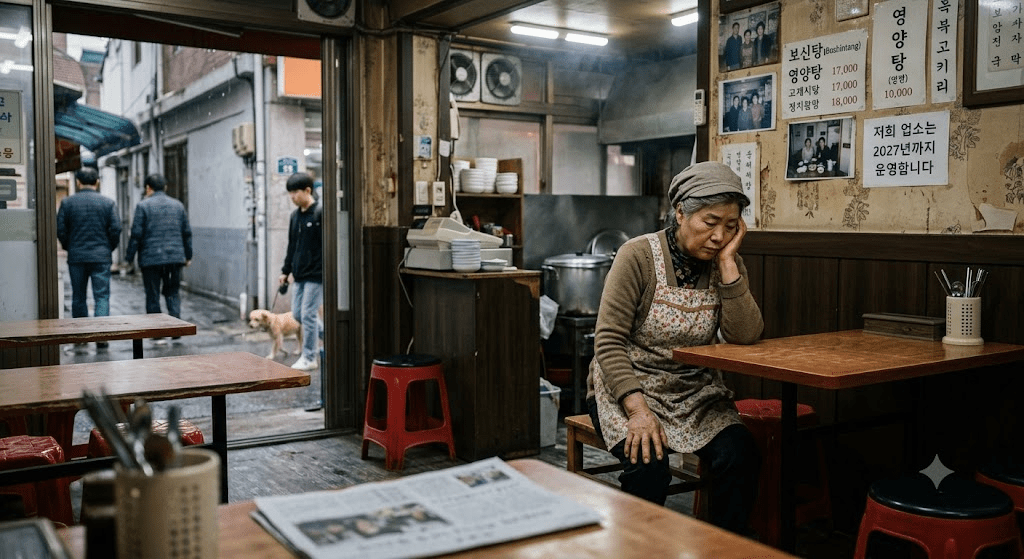
For the few old-school boshintang (dog meat stew) stalls still trying to hold on near Seoul, this year’s boknal—the hottest summer days where uncles traditionally eat hot stew for a boost of “stamina”—was a total fly-mosquito event. Translation: dead quiet. Nobody coming!
With the massive cultural shift away from dog meat, market conditions have completely flipped:
| Market Factor | Current Reality |
|---|---|
| Supply | Dropping rapidly across all provinces |
| Prices | Skyrocketing up to 60,000 won per kilo |
| Foot Traffic | Business dropped to less than one-third of normal levels |
Out With the Stew, In With the Sofa Sovereigns
The poor stall aunties who operated their shops for 40-over years tried their best to pivot, with some switching over to sell black goat stew instead. But diners aren’t really buying it—literally! Tak boleh, as we say.
As more rescue pups claim absolute sovereignty over living room sofas and demand premium belly rubs, this ancient eating tradition is officially kopi gao finish, packet ready to throw away—finito already!

 Kopi Kaki SG
Leave a comment