
Aiyoh Kakis, gather around! Grab your popcorn (or your favorite pastry), because the local internet scene is buzzing over a heated showdown at VivoCity.
What started as a quick bakery run for a mother, her two kids, and their helper spiraled into a viral storm touching on special needs, food hygiene, public shaming, and retail ethics.
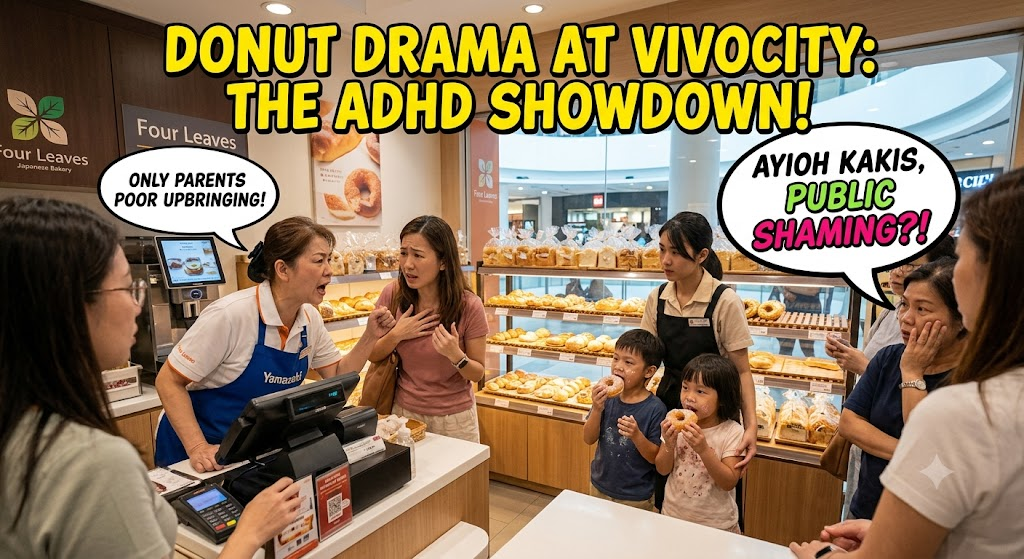
Here is the full story of what happened at Yamazaki Bakery, the science behind the drama, and how both parents and retail staff can handle these sticky situations better in the future.
🥐 The Incident: A Split-Second Grab
The story unfolded when an anonymous mother posted on the Facebook group Complaint Singapore. She visited Yamazaki Bakery (by Four Leaves) at VivoCity with her helper and her two young children, both of whom have Attention Deficit Hyperactivity Disorder (ADHD).
Before anyone could react, the kids’ hands moved in a flash: they grabbed two donuts straight off the open display shelf and took a bite right then and there.
Realizing what happened, the mother immediately took action:
- Apologized right away to the bakery staff.
- Promised to pay for both consumed donuts without hesitation.
- Had her helper bring the kids outside to keep the peace while she finished browsing.
Situation handled responsibly, right? Not quite.
Moments later, an elderly staff member behind the packing counter allegedly blurted out in Mandarin, loud enough for the whole shop to hear:
“We cannot blame the children. We can only blame the parents for their poor upbringing!”
Deeply hurt, the mother approached the employee to explain that her children have a medical condition affecting impulse control, not “bad manners,” and that the comment was deeply hurtful.
Later, she shared her grief online—complete with a photo of the staff member—sparking a fierce debate.
🧠 Understanding ADHD: Why “Just Teach Them” Isn’t That Simple
To understand why this incident hit such a raw nerve, we have to look at how ADHD affects young brains.
⚡ Neurotypical Brain vs. ADHD Brain
- Neurotypical Brain: Sensory Input (e.g., Sweet Donut) ➔ Prefrontal Cortex pauses & evaluates: “Wait, must pay first!” ➔ Action delayed/controlled.
- ADHD Brain: Sensory Input (e.g., Sweet Donut) ➔ Executive Dysfunction causes instant action: “See food ➔ Eat food!” ➔ Action taken immediately.
- Impulse Control Deficits: ADHD is a neurodevelopmental condition that impairs executive functioning. The brain’s “brakes” don’t fire fast enough to stop an action before thinking through consequences.
- Sensory Triggers: Eye-level, open-concept bakery displays with fragrant, colorful treats are practically designed to trigger high impulsivity in neurodivergent kids.
- It’s Not Disobedience: As the mother explained, these split-second actions aren’t a sign of being spoiled or malicious—their brains simply process rewards and impulses differently.
🛡️ For Parents: How to Navigate High-Stress Public Incidents
Raising neurodivergent children in high-density, fast-paced Singapore can feel like navigating a minefield. When public mishaps happen, here are practical ways parents can de-escalate:
1. The “Safety First, Pay Later” Reset
- Physical Proximity: When walking into open-food environments (like bakeries or buffets), hold hands or keep high-impulse kids right beside an adult before entering the aisle.
- Remove and Reset: Moving the children outside immediately—just as this mother did—was the right call to prevent further food contamination.
2. Handling Hostile Comments Gracefully
- Don’t Expect Immediate Understanding: Frontline workers are often exhausted or focused purely on operational policy. Expecting instant empathy in a tense moment usually leads to disappointment.
- State Facts, Not Defense: A quick “I am paying for the item now, please excuse us” keeps the exchange purely transactional and prevents escalating into a public argument.
3. The Golden Rule of Online Venting: Avoid Doxxing
- Sharing your story to raise awareness about special needs is valuable.
- However, posting photos or identifiable details of retail workers online almost always turns the public against you, shifting focus away from your message toward privacy ethics.
🏪 For Retail & Service Staff: Handling Accidents Without Conflict
Frontline service staff face tremendous pressure regarding hygiene and store loss, but customer service delivery makes all the difference.
| What NOT to Do ❌ | Better Alternative Approach ✅ |
| Personal Remarks: Critiquing parenting skills or making personal assumptions. | Focus on the Product: Keep comments strictly professional: “No problem, let me help you ring those up.” |
| Loud Public Commentary: Shouting or gossiping across the counter. | Private Communication: Handle the transaction quietly at the register to protect store decorum. |
| Escalating Defensiveness: Arguing when a customer explains a situation. | Neutral Acknowledgement: A simple “Thank you for taking care of it” resolves the interaction instantly. |
Why Retailers Should Train for Neurodiversity
- Empower Frontline Teams: Staff should be trained on basic de-escalation tactics so they don’t treat honest accidents like criminal behavior.
- Physical Safeguards: For bakeries with open displays, placing lower glass shields or keeping child-attraction items on higher racks can physically reduce split-second grabs.
💬 The Takeaway: Compassion Costs Nothing
This VivoCity incident highlights the fine balance between public accountability and community empathy.
Yes, food safety and hygiene in public spaces matter. But when a parent steps up, apologizes, and pays for damaged goods immediately, adding harsh verbal judgment only causes unnecessary pain.
Before jumping to conclusions when seeing a child misbehave in public, take a breath—you never know what invisible battles a family might be fighting.

 Kopi Kaki SG
Leave a comment